Macron blames ‘seditious’ far left for unrest as France bans some protests
Thursday’s planned demonstrations are outlawed in parts of Paris, Lyon, Lille and Grenoble.
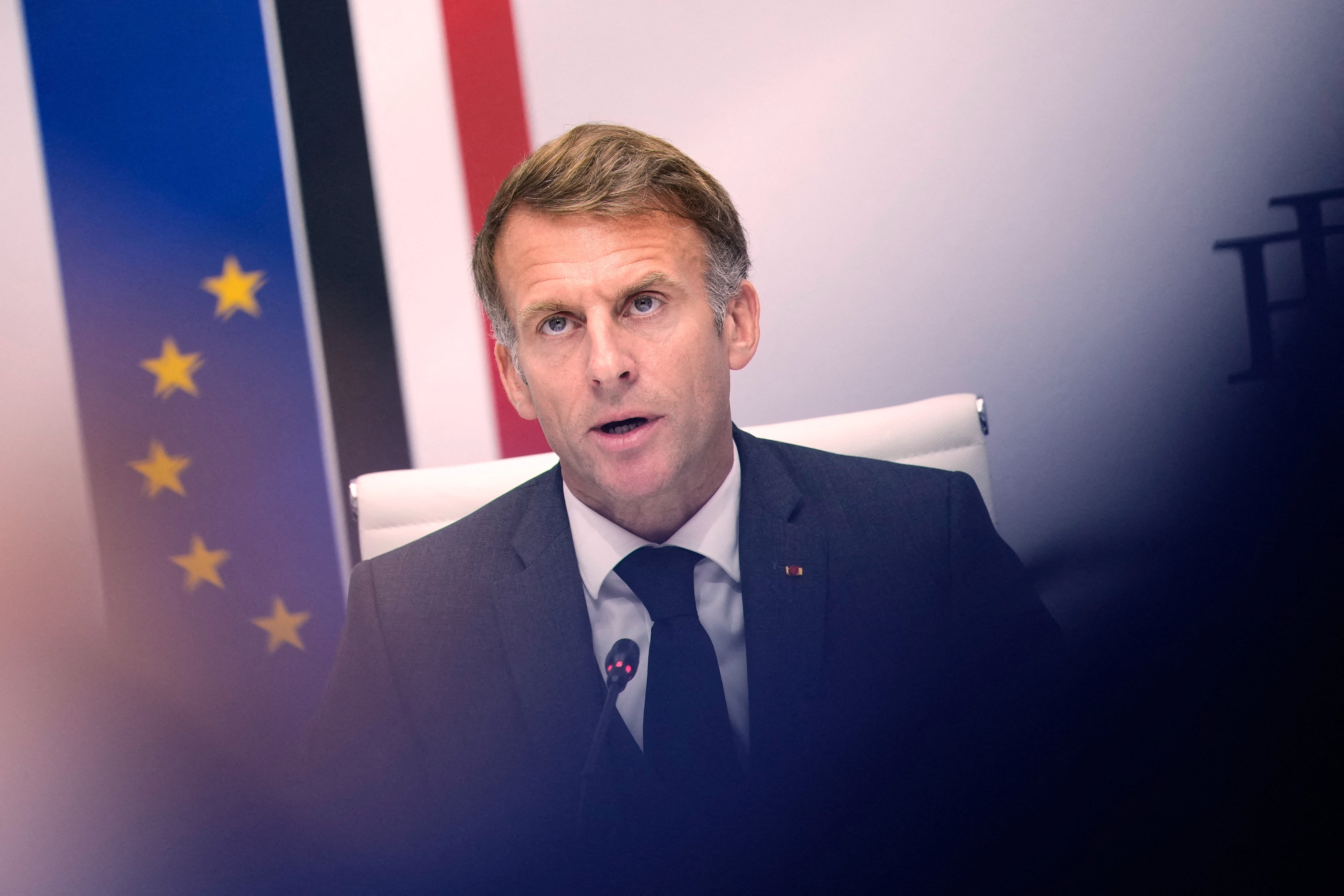
French authorities have barred demonstrations in several of the country’s largest cities, as President Emmanuel Macron blamed far-left groups for stoking violence during weekend protests.
The Paris Police Prefecture announced that Thursday’s protests would be banned in key parts of the city until 8pm (18:00 GMT). That includes areas near the presidential Elysee Palace, both houses of parliament, the city’s main train stations, as well as parts of downtown where looting occurred over the weekend.
Recommended Stories
list of 3 items- list 1 of 3‘It’s hard for us’: Paris small businesses bear brunt of protest violence
- list 2 of 3Europe is in trouble, and it is blaming Muslims
- list 3 of 3Why are French protesters chanting ‘Bismillah, c’est les ténèbres’?
A police source told the AFP news agency the ban was necessary due to organisers’ “inability to prevent violence and vandalism”.
Elsewhere in France, authorities also prohibited protests planned for Thursday in Lyon, Lille and Grenoble.
The restrictions come after more than half a million people gathered across France on Saturday in a protest that brought together students demanding better conditions in schools and groups denouncing high living costs.
France’s justice minister Gerald Darmanin said on Thursday that at least 2,700 people had been taken into custody after riots broke out in several areas, and shops were looted. Darmanin added that 217 of those arrested had already been convicted and jailed. 1,000 others were being prosecuted.
President Macron blamed Saturday’s riots on what he called “seditious acts” by “ultra-left” groups, whom he accused of trying to “bring down the Republic”.
Speaking from the Elysee Palace on Thursday, Macron said France would ban all “illegitimate” protests in the coming days, while approved demonstrations led by organised groups like unions would be required to take alternative routes outside city centres to protect businesses.
He added that he would convene the country’s defence council on Friday to take further action.
Thursday’s planned protests were seen as a prelude to a large demonstration on Saturday, when activists from the “yellow vest” movement, whose demonstrations over fuel prices shook France in 2018 and 2019, are expected to join.
Some of those protests, including marches in Lyon, will also be banned, local authorities said after hours of “chaos” last weekend when more than 200 shops were looted.
Officials for the Bouche-du-Rhone region covering France’s second-largest city Marseille has also banned all protests there on Saturday citing “obvious reasons of security”.
The French government said the Louvre, Orsay and Picasso museums in Paris would remain closed on Saturday due to new planned demonstrations.
Jean-Luc Melenchon, a far-left candidate for next year’s presidential election criticised by the government for not strongly condemning the protest violence, blamed authorities’ “non-stop brutal repression” for the unrest.
“On Saturday, the army is guarding buildings instead of the police, and the Paris police prefect is asking shopkeepers to call on private security guards…,” Melenchon said in a post on X.
Meanwhile Marine Le Pen, the far-right leader currently topping opinion polls, accused Macron’s government of being too soft and lacking authority.
Prime Minister Sebastien Lecornu, who met union representatives on Wednesday, said a “massive” security operation was planned for Saturday to prevent a repeat of the violence by small groups of rioters that had exposed shortcomings in security measures.
Meanwhile, Macron held a meeting with intelligence services, Lecornu and ministers on Thursday morning to obtain a detailed account of what went wrong over the weekend and review preparations for upcoming protests.
Union representatives said their meeting with Lecornu did not result in concrete proposals. They are now focusing on another big day of action scheduled for November 5, calling on private and public sector employees to join.
The education demonstrations first erupted last month in a high school in Creteil, southeast of Paris, over a lack of staff.
From there, class strikes, blockades and demonstrations spread to other Paris suburbs and then nationwide, including in smaller towns.
High school students have raised concerns about underfunded schools, dilapidated facilities and staff shortages, particularly in lower-income neighbourhoods.
The school demonstrations and blockades have morphed into larger protests over soaring living costs.
