Initial results indicate victory for Iotova in Bulgarian presidential vote
Acting President Iotova would become nation’s first elected female head of state if official results confirm her win.
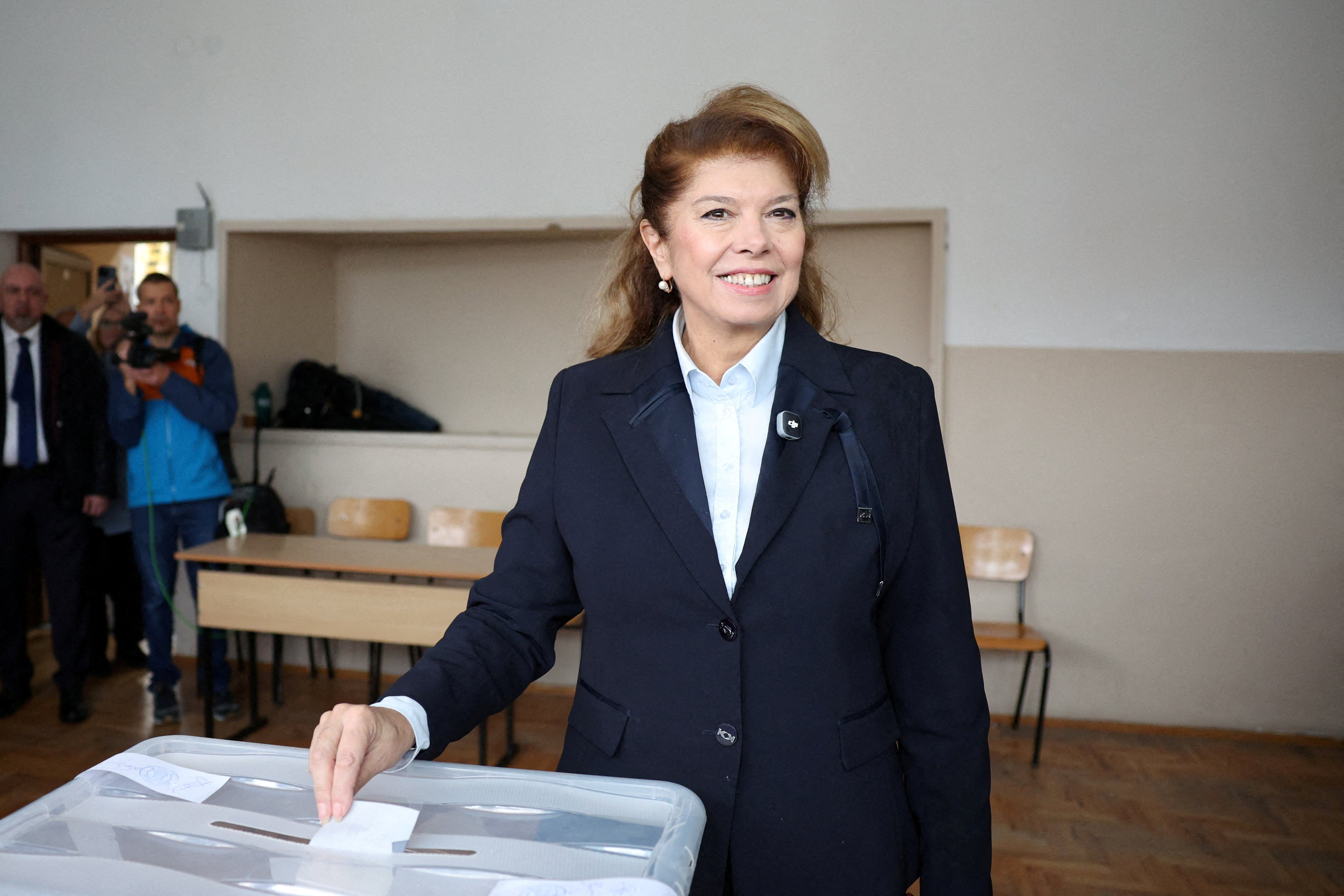

Acting President Iliana Iotova is the apparent winner of Bulgaria’s presidential run-off, according to initial results, as her rival has conceded defeat.
Iotova, who advocates for dialogue with Russia and opposes military aid to Ukraine, received 58 percent of the vote in Sunday’s run-off, according to several polling agencies’ counts.
Recommended Stories
list of 3 items- list 1 of 3Drone attack sinks ship off Bulgaria’s Black Sea coast, PM says
- list 2 of 3Bulgarians vote for president in shadow of Russia’s war on Ukraine
- list 3 of 3Bulgaria’s election heads to a run-off amid low voter turnout
If confirmed by official results, she would become Bulgaria’s first elected female head of state.
Her opponent, former interim Prime Minister Andrey Gyurov, is said to be trailing at about 38 percent.
Gyurov, who is backed by the pro-Western opposition, said the results had to be accepted as they stood.
“This is how the Bulgarian citizens have voted,” he said.
Exit polls put voter participation at about 27 to 29 percent, slightly higher than the first-round race last week, which had a record-low turnout of 23 percent.
Official results are expected on Monday as ballots are counted for the presidency, which is largely ceremonial.
Iotova, 61, took over as acting president in January, when her longtime ally, Prime Minister Rumen Radev, resigned to run in, and win, a parliamentary election.
“I don’t like either of the two candidates,” Krassimira Kostova, a 64-year-old teacher in the capital, Sofia, who voted anyway, told the AFP news agency.
Petar Doitchinov, a 67-year-old retired engineer, said he had skipped the first round last week because he expected a run-off. He said he voted for “the lesser evil”, as neither candidate matched his “vision of democracy”.
The vote comes as 21 people remain missing following a series of drone attacks last month on commercial vessels off the country’s Black Sea coast. They are suspected to be spillover from Russia’s war on Ukraine.
Prime Minister Radev has said the attacks appear to serve Moscow’s interests and summoned the Russian ambassador, though his government said there was no evidence directly linking them to Moscow.
Both presidential candidates have condemned the attacks and called for a diplomatic end to the war in Ukraine.
Gyurov, a banker and former caretaker prime minister, criticised Iotova in a television debate for not explicitly blaming Russia. “Russia must stop its aggression so that the next steps can be taken,” he said.
Iotova said that “peace can come only through negotiations”. After voting, she said she wanted “Bulgaria to be strong in a strong Europe” and “sovereign in its decisions”.
In the first round of voting last week, Iotova won 35 percent, with Gyurov on 32 percent, a much narrower gap than the 20-point lead opinion polls had predicted for Iotova.
Political analyst Teodor Slavev told the AFP news agency that voters were passing judgement on “Iotova’s unconvincing response regarding Russian threats in the Black Sea”.
