Yemeni government forces seize strategic positions in al-Jawf
Weapons and ammunition depots are seized after a counteroffensive.
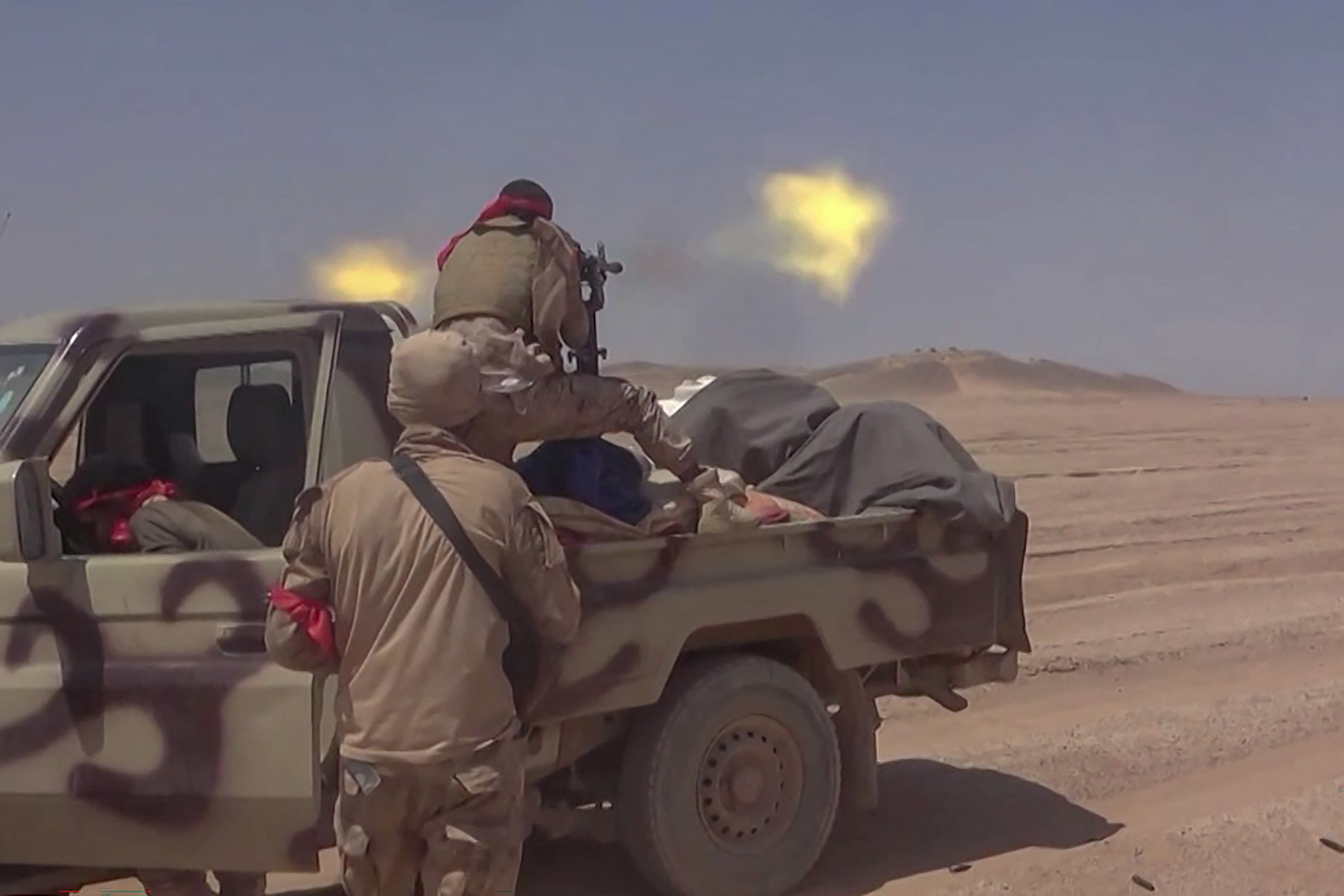

Yemen’s internationally recognised government says its forces have recaptured military positions and strategic heights east of al-Hazm, the capital of the northern governorate of al-Jawf, while fighting continues to deepen the humanitarian crisis in the besieged city of Taiz.
The army’s media centre said in a post on X on Saturday that the 1st Emergency Brigade seized weapons and ammunition depots after wounding, killing and capturing Houthi fighters. It also said the attacks resulted in the destruction of armoured vehicles.
Recommended Stories
list of 4 items- list 1 of 4Bangladesh forms wage board as garment workers protest
- list 2 of 4Iran security chief says US letter signals ‘positive’ shift
- list 3 of 4Mamdani says Trump to grant visa to mother of boy killed in Bronx shooting
- list 4 of 4Trump at Halloween party ‘as himself’ says he’s ‘in no hurry’ with Iran
The Houthis, meanwhile, said they had thwarted advances by government forces in al-Jawf and neighbouring Marib.
The Saudi-led coalition said that it carried out a “targeted military operation to neutralise critical assets used by the Houthis” in support of its war effort.
Coalition spokesperson Major General Turki al-Maliki said in a statement that the operation took place on Sunday morning following continued Houthi attacks against civilians and civilian infrastructure in Yemen and Saudi Arabia.
Al-Jawf borders Saudi Arabia and lies alongside the Houthi-held governorates of Sanaa and Saada, making it a vital strategic front in the government’s campaign to regain territory. The fighting is part of Operation Dawn of Yemen, launched by the country’s internationally recognised government in October to reverse Houthi gains and restore government control over territory held by the group, which seized Sanaa in 2014.
Fighting has also continued around Taiz in southern Yemen with government forces saying they repelled Houthi attacks in al-Aqroudh, southeast of the city, and on the Tur al-Baha front in neighbouring Lahij governorate.
Medical sources told Al Jazeera that a Houthi drone struck a family home in the Old Airport neighbourhood of Taiz city.
Meanwhile, Houthi-affiliated media reported that two air strikes targeted an oil company facility in Bajil district in Hodeidah governorate.
Aid shortages deepen crisis
The fighting comes as the siege of Taiz strains hospitals and restricts deliveries of food, fuel and medical supplies. Although the Houthis do not control the city, they hold key routes in and out of it, limiting access to essential supplies and making it harder for civilians to leave amid reported sniper fire from the surrounding hillsides.
Videos published by Yemeni media showed what the outlets described as the first shipment of medical aid arriving from Marib to support wounded people, displaced families and other residents. Further shipments were reportedly held up by road closures.
Taiz Governor Nabil Shamsan issued an urgent appeal over the health situation in the city, saying 120 health centres had stopped operating and another 66 were close to shutting down. Hospitals are working at only 20 percent capacity, he said.
He said the besieged city is hosting 39,000 displaced families, and called on the international community to work to lift the siege and establish a safe corridor for humanitarian aid.
More than 300,000 people have fled their homes in western Yemen due to escalating fighting, most of them in the last two months, according to the International Organization for Migration (IOM).
More than 43,000 people have fled the district of Al Madaribah Wah al-Aarah in Lahj since the start of October, the highest number in any district in Yemen, the United Nations organisation said on Sunday.
Many families displaced in Taiz governorate are fleeing south to Aden, which now hosts more than 56,000 displaced people.
“After years of conflict, families in Yemen are being forced to flee yet again, often with little more than the clothes on their backs,” said Abdusattor Esoev, the IOM’s Yemen chief of mission.
The UN Population Fund said nearly 6,100 pregnant women were among those recently displaced, including 600 expected to give birth within two weeks of its briefing on Friday.
The Office of the UN High Commissioner for Refugees warned that more than 65,000 refugees and asylum seekers in Yemen face worsening conditions as services are disrupted and food and fuel prices rise.
