Germany accuses Russia of failed drone attack on Leipzig airport in August
Berlin summons Moscow’s ambassador and shuts two Russian institutions over attempted attack on August 4.
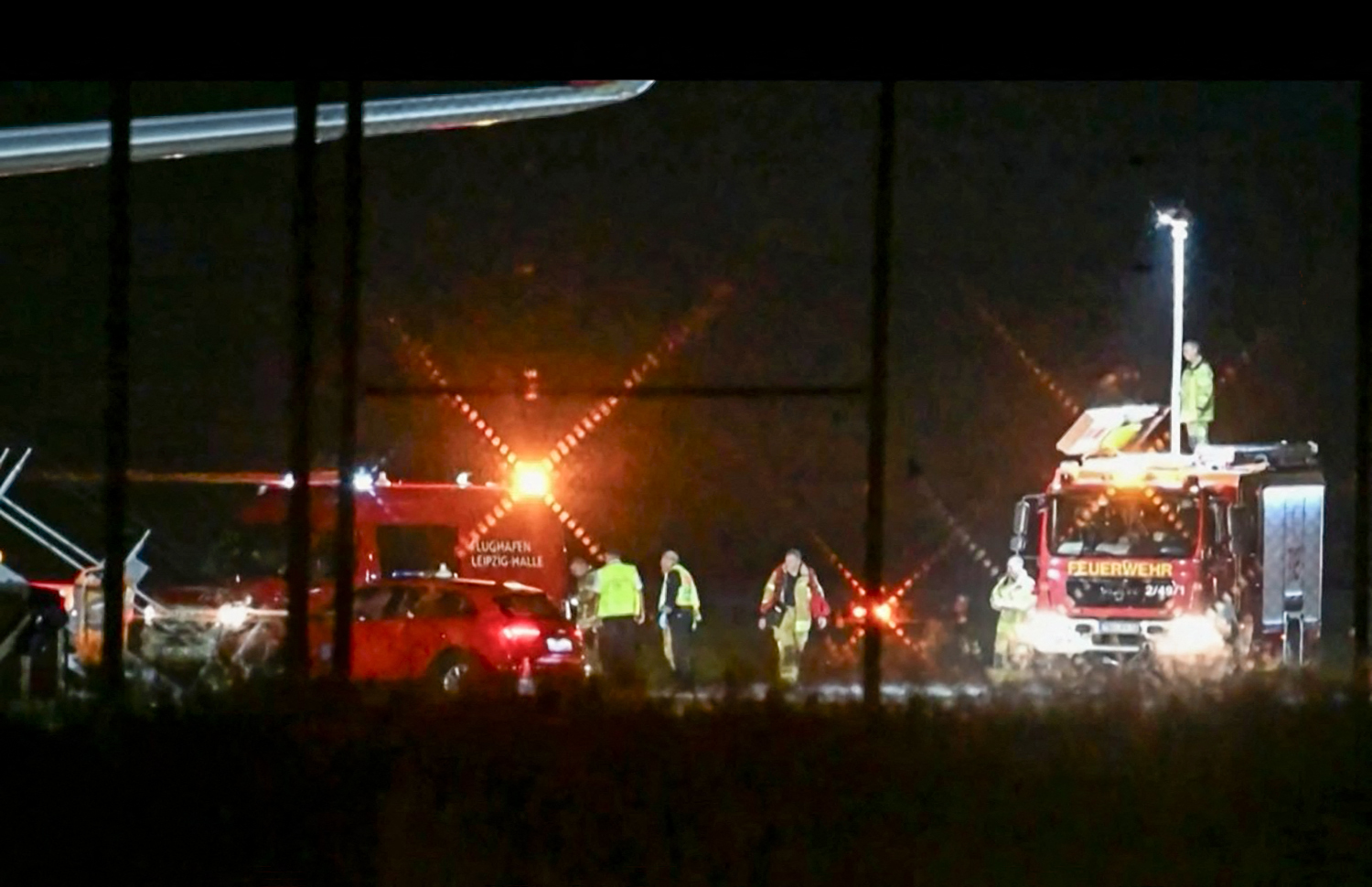
Germany accuses Russia of failed August drone attack on Leipzig airport
Germany has accused Russia of being behind an attempted drone attack on a major regional airport last month, summoning Moscow’s ambassador and ordering the closure of two Russian institutions in response.
Russia rejected the accusation on Tuesday, with President Vladimir Putin suggesting Berlin had “fabricated” the evidence and calling the German response a “serious mistake”.
Recommended Stories
list of 4 items- list 1 of 4What to know about Germany’s drone attack accusations against Russia
- list 2 of 4Iran and Russia vow to stand against US ‘unilateralism’
- list 3 of 4Is Trump wooing Russia again – and why?
- list 4 of 4Russian drone and missile barrage kills at least 12 in Ukraine’s Kyiv
German Interior Minister Alexander Dobrindt said the attempted attack on Leipzig-Halle airport in eastern Germany took place on August 4 and used a drone laden with explosives.
He said it fit a known pattern of “Russian hybrid operations” in Europe and that investigators had proof that agents controlling the drone were working on “behalf of Russian state entities”.
“Taken together, police investigations, patterns of the offences and intelligence findings establish Russian responsibility for the attempted attack,” he told reporters, standing alongside Foreign Minister Johann Wadephul.
“The federal government therefore concludes that Russia is responsible for the hybrid attack.”
The findings were announced as several European countries, which have supported Ukraine against Russia’s four-and-a-half-year invasion, have reported a rise in sabotage attacks and attempts they blame on Moscow.
The drone at Leipzig-Halle airport was found near a Ukrainian cargo plane on the evening of August 4 and defused.
Russia rejects claims
Setting out Germany’s response, Wadephul said the Russian ambassador had been summoned, and that Moscow’s consulate general in Bonn and the Russian House cultural centre in Berlin would be shuttered.
Through the European Union framework, Germany would also seek additional sanctions and travel restrictions on Russian nationals, and press for tougher action against Russia’s “shadow fleet”, he said.
Speaking at a news conference at the Shanghai Cooperation Organisation summit in Bishkek, Kyrgyzstan, Putin dismissed the German accusations and suggested the evidence had been manufactured to shore up domestic support.
German Chancellor Friedrich Merz “has lost the trust of citizens because he is not protecting Germany’s national interests”, Putin said.
Maria Zakharova, spokeswoman for the Russian Ministry of Foreign Affairs, said Moscow would respond to Berlin’s “anti-Russian action”, according to the Interfax news agency.
Germany’s accusation of a direct, Russian-sponsored attack on its soil is among the strongest to be made by a European nation since Moscow’s invasion began.
It also reflects Germany’s tougher approach towards Russia since Merz took office last year. Berlin has expanded military support for Kyiv and backed the use of long-range weapons against targets inside Russia.
On Monday, Germany criticised the United States for welcoming Russia’s finance minister to a Group of 20 meeting in Asheville, North Carolina, warning against any normalisation of relations with Moscow while its war in Ukraine continues.
‘Evidence is clear’
EU and NATO leaders have been quick to pledge support for Berlin.
“We are united in our resolve to stand against Russian aggression. We will deter anyone who seeks to undermine our freedom and security,” European Commission President Ursula von der Leyen wrote on social media. “The matter, including additional sanctions, will be prepared by Foreign Ministers at their upcoming meeting.”
EU foreign ministers were set to meet in the Republic of Ireland on Tuesday evening.
NATO Secretary-General Mark Rutte welcomed the German measures, saying the “evidence is clear” on responsibility. “Russia’s attempts to intimidate us, to undermine our unity and our willingness to support Ukraine are futile and will fail,” he said.
French Foreign Minister Jean-Noel Barrot said that “if the gravity of the events is confirmed”, there would “inevitably be consequences, particularly regarding the sanctions that might be imposed on Russia”.
The United Kingdom also said it stood in “full solidarity” with Germany.
Suspicion over Russian sabotage and spying operations across Europe has been rising in recent weeks, especially since Ukraine has found significant success in targeting Russian infrastructure with drone strikes.
Leipzig-Halle is a major hub for international freight and for support to Ukraine, and is regularly used by Ukrainian Antonov transport aircraft. It also hosts NATO’s Strategic Airlift International Solution (SALIS), which operates almost daily, delivering equipment to NATO battle groups along the alliance’s eastern flank from Finland to Romania.
In July, the EU imposed sanctions on Russian military officers, hackers and private companies, denouncing what it called a years-long cyber-espionage campaign.
On Monday, Poland announced that it has opened a “terror” probe into a recent fire at a factory supplying parts for drones supplied to Ukraine.
