Iran claims attacks on Bahrain, Jordan, Iraq after US strikes kill 11
Kuwait also reports confronting Iranian attacks, as Tehran responds to US attacks that killed 11 people, including 5 at a wedding party.
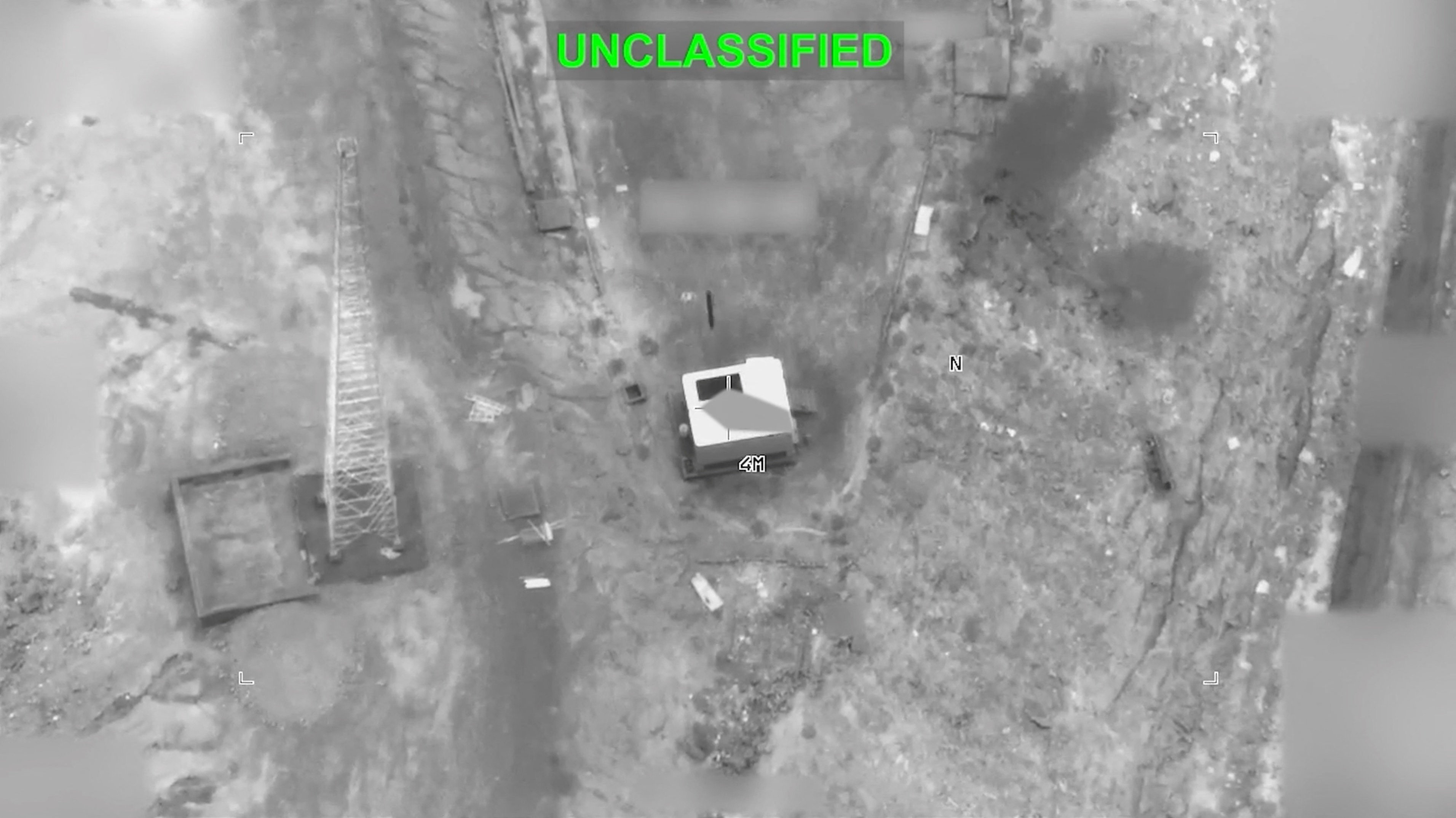

The United States has launched a new wave of attacks on southern Iran, prompting retaliatory Iranian strikes on US bases in Bahrain, Jordan and Iraq, amid an intensifying standoff over the Strait of Hormuz.
The attacks early on Wednesday marked the heaviest exchange of fire between the US and Iran in more than a month. Kuwait also said its air defences confronted Iranian drones and missiles.
Recommended Stories
list of 3 items- list 1 of 3Qatar says efforts under way to end Iran-US war and reopen Strait of Hormuz
- list 2 of 3Iran and Russia vow to stand against US ‘unilateralism’
- list 3 of 3China’s Xi makes first visit to Egypt in a decade, amid regional turmoil
US Central Command (CENTCOM) said in a statement that it had struck “Iranian military sites” after the Islamic Revolutionary Guard Corps (IRGC) attempted to attack US troops and commercial shipping in the Strait of Hormuz.
Targets included Iranian air defence sites, radar systems, maritime assets, mine-laying capabilities and communications infrastructure, it said.
Iranian media reported strikes on Sirik, Konarak, Bandar Abbas, Jask, Asaluyeh and Ahvaz, as well as Qeshm Island.
Esmaeil Baghaei, spokesman for Iran’s Ministry of Foreign Affairs, said one “brutal” attack had hit a residence in Kuhestak as families gathered for a wedding. At least five people were killed, including a child, and 63 were wounded, according to Iranian media.
Iran’s state news agency IRNA, citing Khuzestan’s deputy governor Valiollah Hayati, reported that a further seven people were killed and eight wounded in US missile attacks on three other locations in the province.
Attacks on US assets
The IRGC said it responded to the Kuhestak strike with a ballistic missile attack on Camp Titin, a US Marine Corps site near the Gulf of Aqaba in Jordan.
It also said it hit Prince Hassan airbase in Jordan, targeting hangars housing RQ-4 and MQ-9 drones. It claimed that several aircraft were destroyed and a number of US personnel were killed.
Jordan’s military said it had intercepted 10 of 13 missiles fired at the country, with the remainder falling on open ground.
A US official told Al Jazeera there were no injuries or significant damage at Camp Titin.
In Bahrain, Iran’s army said it launched drones at radar installations and parts of the country’s Sheikh Isa airbase, where Tehran says US forces are stationed.
Bahrain’s Ministry of Interior issued repeated alerts instructing residents to take shelter.
The IRGC later claimed a combined missile and drone attack on US facilities in Erbil province, northern Iraq, and said the strikes destroyed a repair centre and warehouses of technical equipment, and set fuel tanks alight.
Al Jazeera could not verify the claims.
Kuwait also said the country’s air defences responded to “hostile drones and missiles” fired by Iran. Tehran has not commented on the Kuwaiti claim.
Stalled diplomacy
The flare-up on Wednesday follows an exchange of attacks on Sunday, when the US military struck Larak Island in southern Iran, and Tehran retaliated with missile launches against a base housing US troops in Jordan.
It comes as the US-Israel war on Iran, which began on February 28, enters its sixth month, with diplomatic efforts to end the war at an impasse.
US President Donald Trump denied a report by ABC News that the latest strikes were aimed at forcing Iran back to the negotiating table.
“I’m not trying to force Iran to the bargaining table, as ABC Fake News reported,” he wrote on his Truth Social platform, adding that he was satisfied with the status quo.
“I couldn’t care less if they [Iran] sign a worthless, to them, agreement,” Trump said. “I like our position now much better, with almost total control of the Hormuz Strait, and their economy totally collapsing. They are just playing out the inevitable. When are the Iranian people going to rise up and fight?”
Iranian officials meanwhile signalled further attacks.
In his first message following the US strikes, Supreme Leader Mojtaba Khamenei said the Iranian armed forces have “unforgettable lessons” in store for Washington.
Colonel Ebrahim Zolfaghari, a spokesman for Iran’s Khatam al-Anbiya Central Headquarters, said “the offensive operations against the Americans will continue until they regret their crimes.
“We warn that the continuation of American evil in the region will be met with heavier, more widespread, and devastating responses, and any country that cooperates with the aggressive American army must accept its dangerous consequences.”
Ebrahim Azizi, head of the Iranian parliament’s National Security and Foreign Policy Committee, also wrote on X: “Make no mistake: these crimes will not go unpunished.”
Concern in the Gulf
Al Jazeera’s Aksel Zaimovic, reporting from Qatar’s capital, Doha, said there was no independent confirmation of the extent of the damage from Iran’s retaliatory strikes.
“We are seeing a major escalation across the region, with growing concern over whether the conflict will spill far beyond Iran’s borders,” he said.
Earlier on Tuesday, the US State Department had urged Americans in the Middle East to remain alert and prepare for travel disruptions, warning of “the potential for unforeseen escalation”.
Iran, meanwhile, has continued to assert its control over the Strait of Hormuz.
Attacks on ships around the strait have been reported almost daily, despite Trump and his aides saying the US is managing to get millions of barrels of oil through the strait each day, even as Tehran continues to blockade the waterway.
The crisis in the strait has sent energy prices soaring.
The price of a barrel of oil jumped by more than 4 percent after the strikes on Tuesday. In the US, the average cost of one gallon (3.8 litres) of petrol is now more than $4, up from less than $3 before the war.
