Yemen forces advance in Taiz; Houthis take key islands, attack Saudi Arabia
Yemeni government forces have advanced in western Taiz after successfully repelling a Houthi offensive.
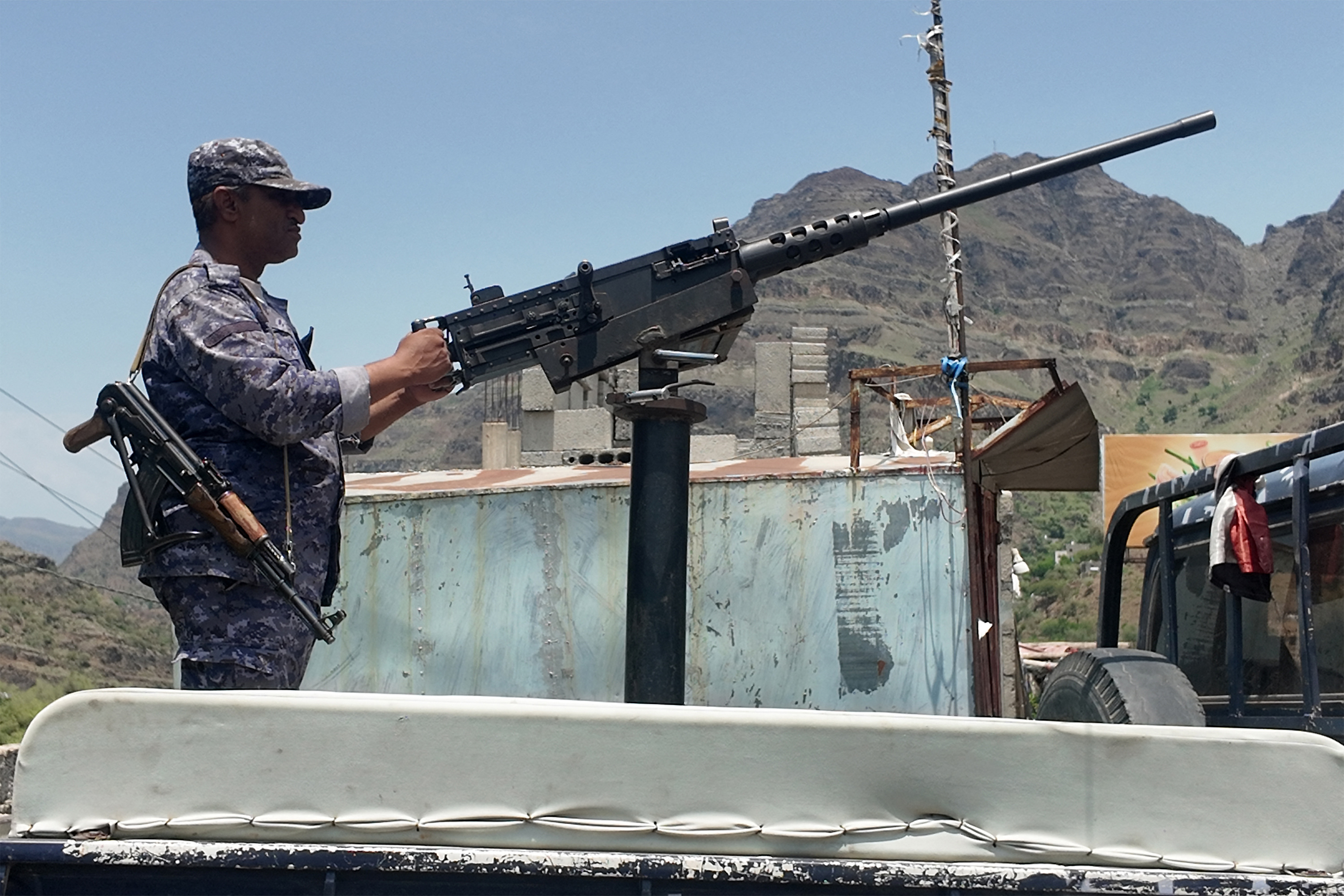

Armed forces affiliated with Yemen’s internationally recognised government have retaken positions from the Houthis and are advancing in the southwestern Taiz province as clashes intensify.
Reporting from Taiz on Monday, Al Jazeera Arabic’s Yasser Hassan said forces loyal to the Saudi Arabia-backed Yemeni government advanced in western Taiz on Sunday after successfully repelling a Houthi offensive.
Recommended Stories
list of 3 items- list 1 of 3More than 2,000 Yemenis flee to Djibouti as fighting intensifies
- list 2 of 3The Houthis’ escalation in Yemen could flop
- list 3 of 3Fighting continues between Yemen gov’t forces, Houthis: What is the latest?
“This comes with the support of air strikes targeting Houthi gatherings. The air force continues to bomb the Houthis on the west coast in Mocha, Dhubab, and their surroundings,” Hassan said, citing a source in government forces.
In a statement on Monday, the Houthis, also known as Ansar Allah (supporters of God), said they launched attacks on targets in Saudi Arabia using dozens of ballistic missiles and drones.
The group said the attacks targeted “military facilities and infrastructure, including aircraft hangars, radar installations, runways, ammunition depots and other targets at King Khalid airbase in Khamis Mushait”, Saudi Arabia.
It said the attacks were a response to a Saudi offensive, which involved more than 300 air strikes across Yemen over five days.
There was no immediate comment from Saudi Arabia on the Houthi claims.
On Sunday, the Saudi civil defence agency sent alerts for the city of Abha and the region around Khamis Mushait, but they were quickly lifted shortly afterwards.
Fighting in Yemen’s more than 10-year civil war reignited in July, threatening a United Nations-brokered truce that halted large-scale violence in 2022, after the Houthis declared a maritime blockade on Saudi Arabia and began targeting its ships in the Red Sea.
The fighting soon spilled over beyond the country’s borders, with the Houthis carrying out air attacks on southern Saudi Arabia, including oil facilities. Dozens of people were wounded in those attacks.
Clashes in Yemen intensified last week after the Houthis captured parts of the country’s Red Sea coast, fortifying their hold on the Bab al-Mandeb strait, a key waterway that normally handles about 12 percent of global trade, including 11 percent of maritime oil and 8 percent of liquefied natural gas (LNG).
The waterway has been an economic lifeline for Saudi Arabia and its oil exports, as the Strait of Hormuz has been effectively blocked by Iranian forces since the United States and Israel launched their war on Iran in February.
The Houthis captured more strategic islands in the southern Red Sea, The Associated Press news agency reported on Monday, citing Yemeni government and Houthi officials.
Houthi officials reported that the group’s troops had deployed on the islands of Greater Hanish and Lesser Hanish, which sit about 86 nautical miles (160km) north of the Bab al-Mandeb.
Separately, repairs to a crucial Saudi oil pipeline, struck in an attack last week, could last three to five weeks, regional officials told AP, putting the route all but out of service.
Global oil prices gained more than 2 percent as the news increased concerns over the ability of the world’s biggest exporter to get its crude to market, potentially offering Iran additional leverage in its war with the US.
Meanwhile, the International Organization for Migration said on Sunday that the fighting in Yemen in recent weeks had displaced nearly 86,000 people.
It added that some of those displaced by the conflict were fleeing Yemen altogether, with more than 2,000 people reaching neighbouring country Djibouti.
