US removes Venezuela from drug list, Trump says
Trump says country has made progress against narcotics since Maduro’s removal, may also remove Colombia and Bolivia.
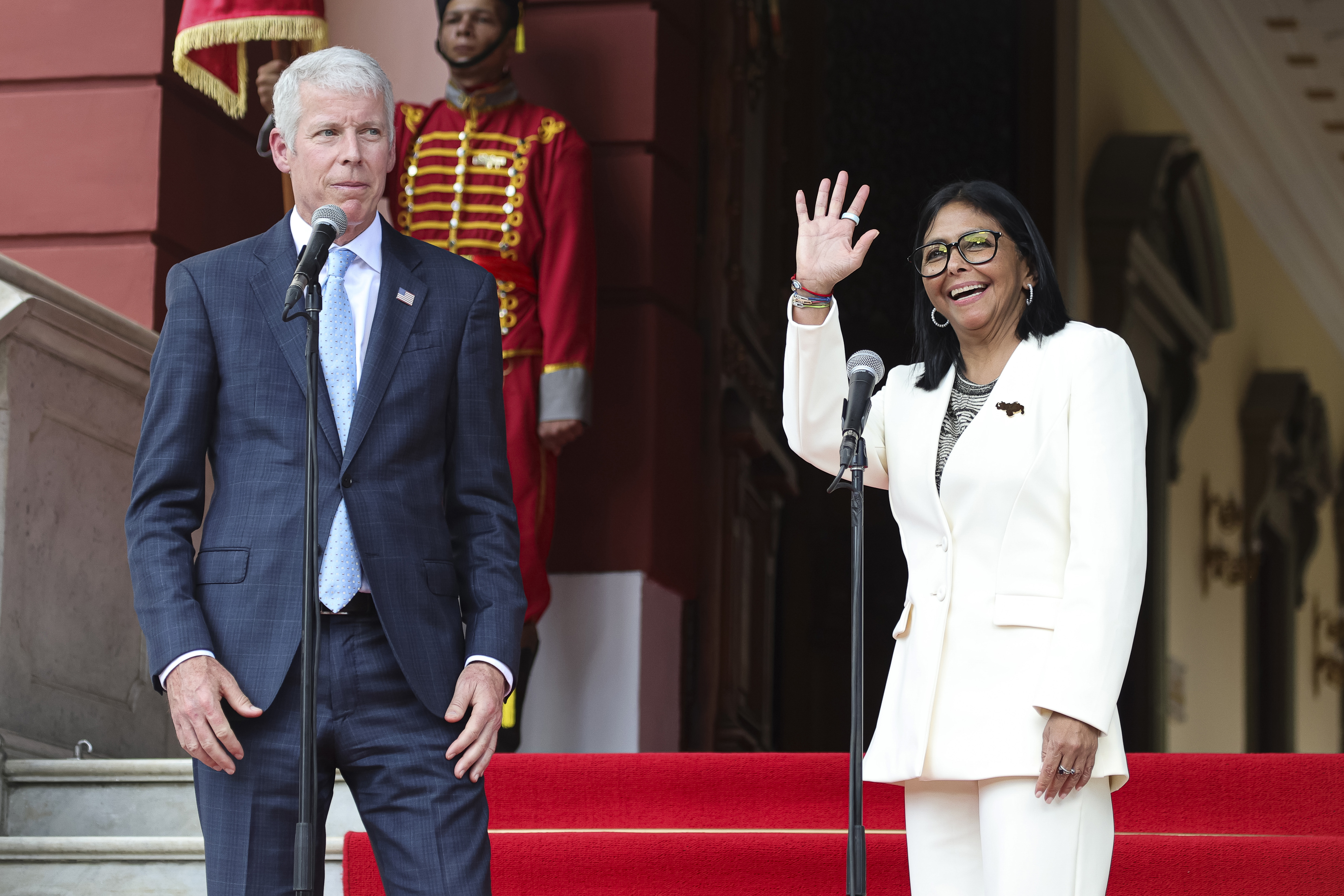
United States President Donald Trump’s administration has decided to remove from its list of countries which have failed to demonstrably combat illegal drug trafficking for the first time in more than 20 years, and is considering removing Colombia and Bolivia.
“In Venezuela, thanks to my Administration’s arrest and removal of former illegitimate dictator and drug trafficker Nicolas Maduro, we are already seeing the results of growing cooperation with the country’s interim government against cartels,” Trump said in a statement submitted to the US Congress on Tuesday and released Wednesday.
Recommended Stories
list of 3 items- list 1 of 3Rubio heads to Ecuador, Colombia, Peru after right-wing victories in region
- list 2 of 3Marco Rubio says US seeks more economic and security ties in Latin America
- list 3 of 3As Chavez and Maduro images disappear, is Venezuela entering a new chapter?
The US abducted Maduro, a leftist and long-time critic of Washington, in January and is trying him in a New York City federal court on drug trafficking charges. Washington has since been working with interim Venezuelan President Delcy Rodriguez, securing agreements for US oil companies to access resources in the oil-rich country.
Under US law, the president must inform lawmakers annually about other countries’ efforts at combating narcotics production and trafficking.
Afghanistan, Bolivia, Burma, and Colombia were designated as having “failed demonstrably” by Trump in the recent report, which also criticised Mexico, Canada, Brazil and Nicaragua.
Trump praised Bolivia and Colombia for electing new conservative leaders that broke with previous leftist governments, saying he expects them to ramp up efforts at coca eradication and combating “narcoterrorist” groups but would keep their designations in place for the time being.
“Dramatic political changes in South America over the past year have created historic openings for United States cooperation with governments in the region,” Trump’s statement said, alluding to the wave of right-wing leaders that have replaced leftists who were critical of Washington in the region.
Bolivia, Ecuador, El Salvador, Honduras, Panama, Peru, Venezuela and Colombia are now among those countries led by leaders who have aligned themselves with Trump.
Many have also joined the Shield of the Americas programme, a regional US-led military and security alliance, which members say is aimed at combating narcotics trafficking and other criminal activity in the region.
On Tuesday, the Trump administration announced it was redirecting $52m in foreign military funding towards Latin America, away from partners in Europe and the Middle East.
