Iceland rejects EU accession talks in referendum
The ‘No’ camp garnered 52.8 percent of the vote while the ‘Yes’ camp secured 47.2 percent, public broadcaster RUV reports.


Icelanders have rejected a government proposal to resume accession talks with the European Union, the public broadcaster RUV reports.
In a vote held on Saturday, 52.8 percent of Icelanders voted “no” while 47.2 percent voted “yes”, according to official results published by RUV on Sunday.
Recommended Stories
list of 3 items- list 1 of 3Vote count under way in Iceland’s knife-edge EU referendum
- list 2 of 3Iceland rejects EU accession talks in referendum
- list 3 of 3Iceland votes in a tight race on whether to resume talks to join the EU
“The nation rejects accession negotiations with the EU,” RUV reported.
Prime Minister Kristrun Frostadottir said after the results that her administration will not move forward with the talks but Reykjavik will continue to strengthen its relationship with the European Economic Area (EEA).
Iceland joined the EEA in1994, giving Reykjavik access to the EU single market without being an EU member state.
The result deals a blow to Brussels, which had been eager to welcome a new wealthy member and had expressed a willingness to compromise with Reykjavík on fisheries and other thorny issues to facilitate its EU membership.
However, a European Commission spokesperson said in a statement that it respects the choice of the Icelandic people and the country remains a close partner of the EU.
Brussels had hoped to be able to present Icelandic membership as an example of positive enlargement that could also make it more palatable for member states to agree to take in less wealthy countries, such as Montenegro.
Iceland’s government had framed its membership plan as a “now or never” moment, and Frostadottir told voters in August that voting “no” would put all EU speculation aside.
“Yes” campaigners said joining the bloc could ease high interest rates and offer more security in a world unsettled by war in Ukraine and United States President Donald Trump’s rhetoric about annexing another Arctic island, neighbouring Greenland.
“No” campaigners said EU membership would threaten Iceland’s sovereignty and its fishing industry.
The industry was fiercely opposed to joining the bloc – 90 percent of its companies were against the idea – and the EU had tried to woo them with a conciliatory approach.
“Iceland’s unique specificities on fisheries and agriculture are well known. They would have to be carefully considered,” EU Enlargement Commissioner Marta Kos said.
“I’m confident that together with EU member states we would find creative solutions.”
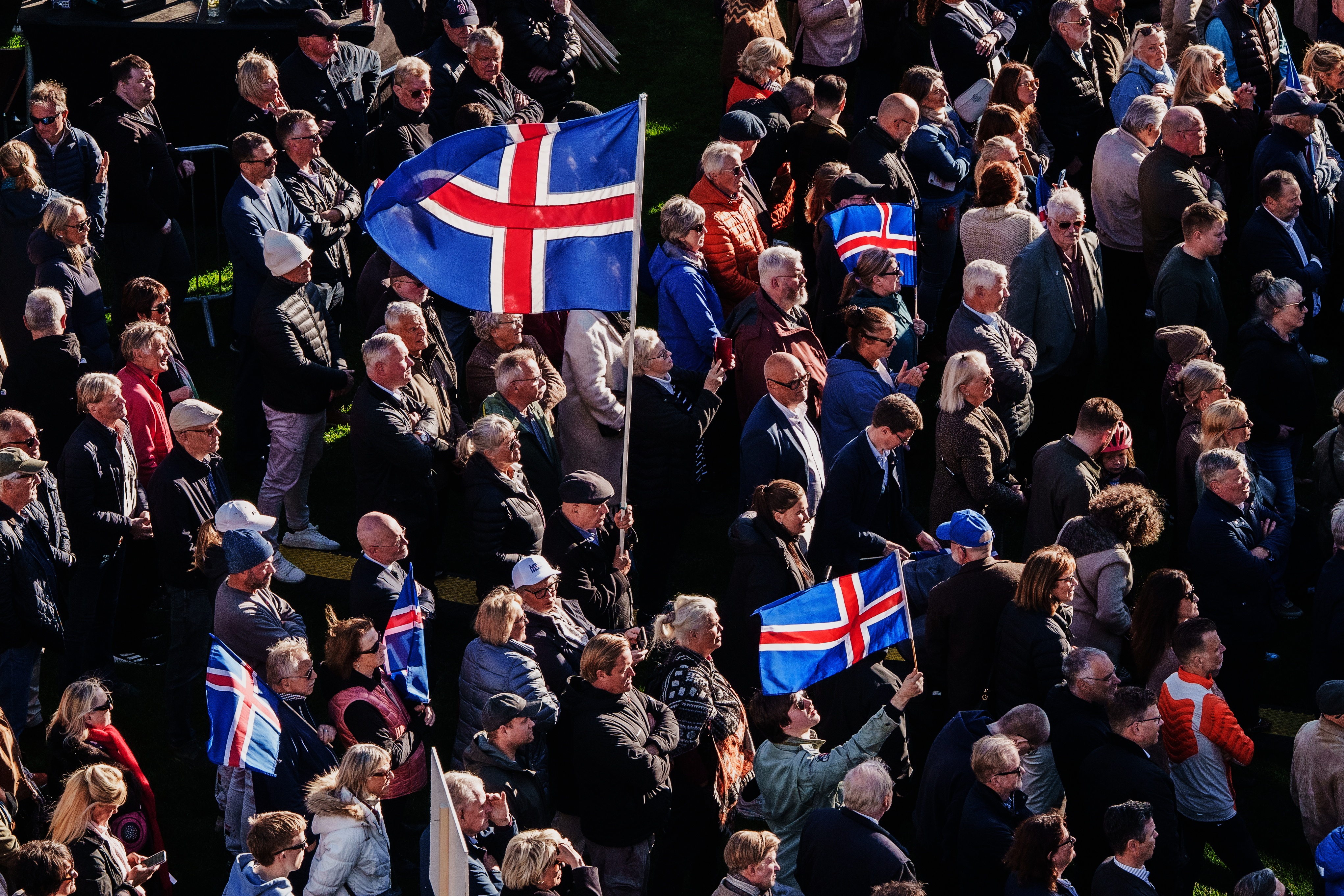
Frostadottir pledged that if Iceland rejected the resumption of entry talks, the EU membership issue would not be put back on the political agenda during her mandate, which ends in 2028.
The government also said that in the event of a “no” vote, it would leave to parliament the question of whether to formally withdraw its EU membership application.
The small island in the North Atlantic is already closely linked to the EU as a member of the EEA and the free-movement Schengen zone, and those ties will remain unchanged.
While the referendum result is technically nonbinding, the government has promised to respect it.
Iceland first applied to join the EU in 2009 when a financial crisis hit the country. A eurosceptic government ended accession talks four years later.
