Bomb attack at Pakistan mosque kills at least 31 people
Attack claimed by faction of Pakistan Taliban (TTP) active in the region.

Deadly blast hits mosque at Pakistan police complex

A suicide bomb attack at a mosque and subsequent gun battle in Pakistan’s restive northwest have killed at least 31 people, including 16 police personnel, with dozens of others injured, according to the AFP news agency.
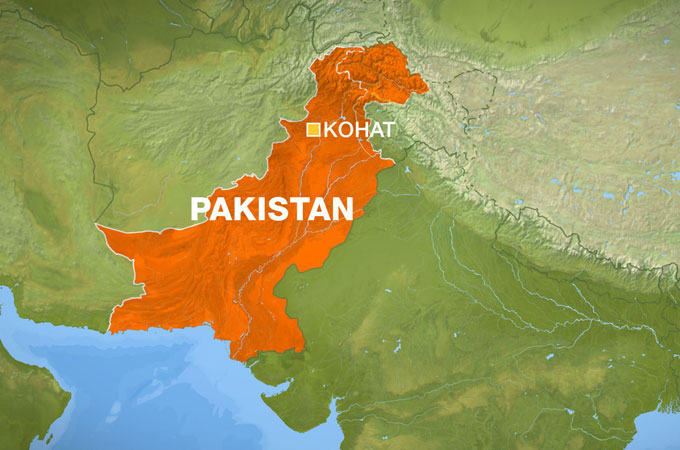
As worshippers gathered for Friday prayers, an explosive-laden car was rammed into the entrance of a mosque at a police headquarters in Kohat. The city is in Khyber Pakhtunkhwa province near the Afghan border.
Recommended Stories
list of 4 items- list 1 of 4Pakistan pledges full committment to defence of Saudi Arabia
- list 2 of 4India-Pakistan navy ship collision sparks alarm over unintended escalation
- list 3 of 4Bomb attack at Pakistan mosque kills at least 31 people
- list 4 of 4Deadly blast hits mosque at Pakistan police complex
A faction of the Pakistan Taliban, known by the acronym TTP, claimed responsibility. Ittehadul Mujahideen, which means Mujahideen Alliance and is linked to Taliban commander Hafiz Gul Bahadur, said it carried out the suicide bomb attack.
Provincial police chief Zulfikar Hameed confirmed the suicide bombing. After the explosion, gunmen attempted to enter the police compound and exchanged fire with officers.
At least 15 bodies and more than 50 injured were taken to hospital, said Dr Tahir Shah, according to the dpa news agency.
Sources told Al Jazeera that at least 75 people were injured.
Senior rescue official Bilal Faizi said most of the wounded were worshippers, the Associated Press news agency reported.
The mosque was badly damaged, and the police station’s outer wall collapsed. Residents said they heard the blast from some distance away.
Al Jazeera’s Kamal Hyder, reporting from Islamabad, said at least six of the attackers were killed in the fighting. He added that Pakistan accuses the Afghan Taliban of allowing the TTP and other groups that orchestrate attacks to operate from Afghan territory. Officials in Kabul deny the accusation.
The TTP is separate from, but allied with, the Taliban, which returned to power in Afghanistan in 2021.
“Kohat is close to the Afghan border, it is the main city en route to the restive North Waziristan region, it is also on the way to Bannu and Dera Ismail Khan. Over the past few months, we’ve seen deadly attacks on all these areas,” Hyder said.
![People carry an empty coffin box along a street leading to a police facility following an attack at the facility in Kohat, Pakistan, on September 18, 2026 [Reuters]](https://aljazeeranews-3fuh52rgrl.edgeone.app/wp-content/uploads/2026/09/2026-09-18T120441Z_137459894_RC2OLNADQTEZ_RTRMADP_3_PAKISTAN-BLAST-1789742482.jpg?w=770&resize=770%2C513&quality=80)
Those armed groups are trying to “overthrow the Pakistan government”, said Michael Semple, a visiting professor at Queen’s University Belfast and a former EU representative in Afghanistan who negotiated with the Afghan Taliban.
Sophisticated attacks such as in Kohat could not be attempted without planning, logistics and training, Semple told Al Jazeera.
“Essentially, this seems to fit into the pattern of the Afghan Taliban providing sanctuary to both al-Qaeda and different factions of the TTP to do the kind of training for this kind of attack,” he added.
The tension has seen both states launch intermittent cross-border attacks.
The attack in Kohat came the day after a roadside bomb killed six soldiers in a security forces convoy in the northwestern Hangu district.
Government troops raided various areas on Thursday and killed 10 suspected Taliban fighters, the military and police said.
Pakistan’s Prime Minister Shehbaz Sharif condemned the bomb attack and directed authorities to accelerate rescue operations.
The Ministry of Interior said the attackers’ “cowardly actions” could not weaken the “nation’s firm resolve”.
